28 MARCH SATURDAY
STARTING A WEBSITE PROJECT: CONTENT PLANNING
The first step when starting a website project is not to move directly into design.
First, I need to determine things like what will be inside the website and which pages will be included. I know that if the content structure is not planned well, I will face unnecessary difficulties during the design and development processes as well.
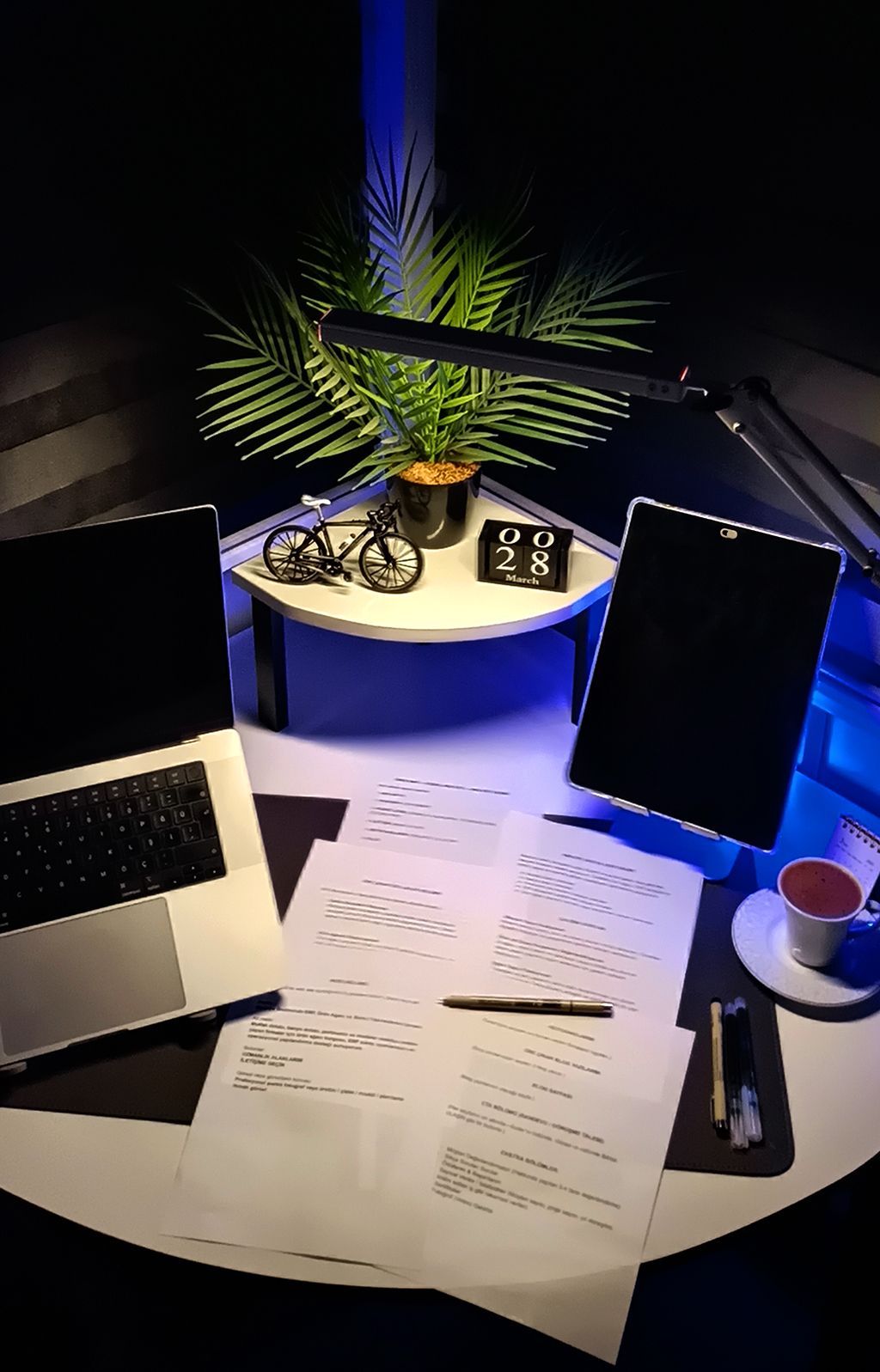
That is why, before starting a project, I take notes and try to see the content more clearly by printing it out.
In my website projects, even though it is rare, all content can sometimes be provided by my clients. Actually, this is how it should be. After all, they should be the ones who know their sector and their company best. At this point, web designers and developers should be guiding in content creation.
But most of the time, a large part of the content, and sometimes all of it, is left to us. In this case, it is necessary to research that sector thoroughly and have accurate information about it.
Let’s say the company you are going to start a website project for operates in the construction sector. Let’s also assume that the content is completely left to me. If it is easy to communicate with the company, I ask them for things such as which services they provide, information about their company, and the projects they have completed in the past.
The part where I say “if it is easy to communicate” is important, because in these kinds of projects, establishing fast and healthy communication is not always easy. The information and documents you request from your client may not always arrive on time or in the correct way. Sometimes, when you ask for a text about their company, you may even be told to write it yourself. But when you do not even know the founding date of the company, things become difficult, and situations like this can extend the project process.
My working process goes like this. First, I examine the websites of a few large companies from Turkey and around the world that operate in the same sector. Then I look at the websites of a few local companies that can be considered competitors in the sector. Without a doubt, these researches become my biggest helper in preparing the content. After all, it is not possible to gather this information by staring at an empty wall.
Then there is a reality that has recently entered our lives: artificial intelligence. We start exchanging ideas with artificial intelligence. I say, “these should be included,” and it says, “these should be included, these should not be included.” We find the middle ground and agree. In the end, the content appears in written form in front of me.
- These pages will exist,
- These contents will be on the Home Page,
- These contents will be on the other pages, and so on.
Speaking of the “reality of artificial intelligence”, I should write a few things. The situation is not simply having artificial intelligence write the website content. I am talking about hours of work. Determining all the details of the project, researching on the internet for hours, then presenting the notes taken to artificial intelligence and exchanging ideas. This is not very secret information. It has now become a reality of our lives. Without a doubt, it has also become one of my biggest helpers in my projects.
Afterwards, I need to present this to my client in written form. But since most of the time it is not wanted to be read or reviewed because of “long texts”, I need to turn it into a draft. I prepare a wireframe-style design. It includes short notes such as which section is in which box.
By seeing this, my clients give feedback such as “I don’t want this section” or “I want this instead.”
After that, the design process begins. I will also talk about the design and development processes in the coming days.
I wanted to share this post about “content planning”.
This content planning also has another advantage. It helps you warm up to the project. When working freelance, you constantly work on projects from different sectors. On some days, you may need to work on multiple projects, make revisions, and handle updates within the same day. Taking notes this way and spending time on the project helps you understand it more accurately.
For example, right now, I am reviewing the content I prepared yesterday for the website project whose design process I will start tomorrow. I determined a basic 6-page content structure. It consists entirely of headings and short explanations. It includes information such as which pages will be on the website and what content will be included on which pages.
Now I will prepare them as a draft, and then I will start the design process.
26 MARCH THURSDAY
USING A BUSINESS EMAIL ADDRESS WITH YOUR DOMAIN NAME WITHOUT HAVING A WEBSITE
You do not necessarily have to have a website in order to use a business email address, in other words, an email address connected to your domain name. Many people think these two things are directly connected.
There is a perception as if a website must be built first, and only then an email address can be used with that domain name. However, technically and practically, this is not a requirement. After purchasing your domain name, you can use email addresses connected to that domain even if your website is not live. I think this commonly misunderstood point needs to be clarified first.
This information is especially valuable for independent professionals. Because not everyone may immediately have the budget, time, need, or ready content to build a website.
You can redirect a domain name you purchase under your own name to your LinkedIn profile, your Instagram account, or your portfolio page. At the same time, you can also actively use the email address connected to that domain name.
For example, a designer can purchase a domain name like nameandsurname.com, redirect it to their Behance profile, and use an email address such as info@nameandsurname.com.
On the individual side, this approach leaves a very positive impression. Because people see someone who positions themselves in a professional way. For a designer, consultant, or any specialist, an email address like info@nameandsurname.com is a detail that creates trust. Moreover, it is also considered completely natural for the domain name to redirect to a social profile or a personal presentation area.
But when we evaluate the same situation for companies, the same positive effect does not occur. If a business uses its own domain name, people naturally expect to see a working, explanatory, and trustworthy website on that domain as well. While the email address looks professional, having nothing appear when the domain name is opened, or having it redirect only to another social media account, will leave a negative impression for companies. Because here, the expectation is not personal visibility, but corporate integrity. On the company side, the domain name is no longer just a communication detail; it is perceived as the brand’s official digital address.
That is why using an email address connected to a domain name without having a website should be evaluated differently depending on who is using it.
For someone building a personal brand, this can be a smart, simple, and professional start. In fact, it is often considered the right step taken before building a website. But for companies, the same situation usually gives the feeling of an unfinished corporate presence. In other words, the issue is not whether it is technically possible or not; it is the perception it creates outside.

20 MARCH FRIDAY
THE FIRST 1 HOUR OF THE DAY
How a freelancer starts the day seriously affects how the rest of the day will progress. If you start the day in a scattered, uncertain way, without fully knowing what you will do, you carry the effect of that disorder throughout the day. But when you make a calmer, clearer, and more controlled start, the work continues in the same way.
For a while now, I have stopped working at night and started waking up early in the morning to work. After a light breakfast, I take my coffee, sit at my corner desk by the window, and spend 1 hour planning the day on my laptop.
When determining the to-do list, your job is actually not that difficult. In front of you, there are the ongoing projects at that moment and the revision requests related to the projects you completed in the past.
Taking notes is also very important so that you do not forget these things. Sometimes, in the work you think you have completed, there may be missing details that you forgot. For this reason, taking notes is very important.
I determine the tasks I will do according to their order of priority. For example, let’s say I am at the computer at 7 in the morning and I have started working. I should be able to ask myself this: How many hours will this task take?
If I say this task will be finished at 12 noon, and when it is 17:00 that task is still not finished, then there is a problem either in my working order or in my planning.
For this reason, planning the day correctly and being able to apply it properly in your working order, in other words, being able to do both of them correctly, is very important.
19 MARCH THURSDAY
THE POWER OF SHORT BREAKS
Taking a break while working can sometimes seem like a waste of time, especially when there are tasks that need to be completed. But working for a long time without taking a break does not speed up the work; it makes the mind heavier. This lowers your working pace. Attention decreases, the error rate increases, and even the simplest decisions start to take longer than necessary.
Taking a break should not only be thought of as getting away from your desk for half an hour or 1 hour. Things like getting up from the desk and walking for a few minutes, looking out the window, or getting some water also help clear your mind. When you return to your work after that short distance, you may feel that the tasks that seemed unsolvable or difficult a moment ago have become easier.
I used to think of taking breaks as disconnecting from work. Now, on the contrary, I see it as necessary in order to stay inside the work. Because when you try to work for hours without interruption, not only your attention but also your desire to work gets worn down. Sometimes, stepping away for just a few minutes is enough to see a task more clearly, make fewer mistakes, and make calmer decisions.
But in the freelance working order, the point that needs attention is this: when you take a break, you should not completely disconnect from the work. I can say that I still experience this from time to time. The desire to take a short 5-minute break can lead to 3-5 hours of being disconnected from work. For this reason, it is important to define your working hours clearly. Especially, it is necessary to stay away from things like the phone, social media, and YouTube as much as possible.

16 MARCH MONDAY
THE COMFORT OF GETTING A CLEAR BRIEF
One of the greatest comforts when starting a job is knowing clearly what you are going to do.
Being able to understand from the beginning what your client wants, what they do not want, what their priority is, and what kind of result they expect is almost half of the project. Because projects that start with uncertainty do not only progress slowly; they also tire both sides quite a lot.
Sometimes your clients may not be able to fully explain what they want, and this is very normal. After all, getting a brief is also partly about asking the right questions. The question “What kind of thing do you want?” is often not enough. Being able to ask the right questions is important.
When there is a clear brief, the revision process also progresses in a healthier way. When a change is requested, it becomes easier to understand whether it is really based on a need or whether it comes from a momentary indecision.
Full-time work and the freelance working process should also be evaluated separately. When working full-time, you work at a workplace on certain days of the week and during certain hours of the day. In return, you are paid a salary. And your employer or manager tells you what you need to do. But sometimes they may say: “Do something, let’s see.”
However, in freelance work, such a situation is not possible. The framework of the job and the project must be clearly defined. Because in freelance work, the fee is actually determined based on the working time to be spent. When giving a price quote for a project, you estimate how many hours that project will take on average and offer a price accordingly. For this reason, before the sentence “do something first, let’s see”, which I encounter from time to time, what is wanted should be determined.
As I mentioned above, in the full-time working process, an employer or manager may want to see something, because whether that work is accepted or not, a fixed salary payment is made. Since such a situation is not possible in freelance work, the details of the project should first be determined, and the working process should start after that.
13 MARCH FRIDAY
BEING ABLE TO TELL YOUR CLIENT “THIS IS MORE ACCURATE THIS WAY”
Being professional in your work does not mean being someone who only does what is requested, as some people claim. What should happen is being able to express your opinion clearly when necessary. Because your client may not always be able to describe exactly what they need. Sometimes they may ask for something, but the result of that request may not be very suitable for their brand, target audience, or purpose of use. At that point, it is easy to just say “okay” and move on, but being able to say “this is more accurate this way” shows the real professional stance.
Yes, for full-time employees, showing this attitude is not very easy, especially in our country. I also experienced this difficulty many times during the periods when I worked full-time. But when working freelance, you should be able to do this. Even though your client may seem like your boss, in the end, they are also working for their own company and brand; and what should matter most to you is your client’s company and brand.
Of course, the language you use while saying this is very important. You should be able to explain that the issue here is not correcting your client or belittling their idea.
Simply saying “I think it should be like this” is often not enough. You should be able to explain properly why this is more accurate. You should be able to explain, with reasons, why doing it this way would be more correct.
Your clients will often want to adapt an example they saw on the internet to their own business. But not everything that looks good will be right for every brand. After many years, designers can go through a change like this: doing everything their clients ask for, moving forward quickly without any discussion, and delivering the work. In this case, there is often great satisfaction on the client side, but delivering a work that does not feel right to me never feels correct.
I always want to be not only someone who applies the work, but someone who thinks about the work. Of course, this does not mean that my ideas are always right, but it should also be considered that the ideas offered by someone who has been doing a job professionally for many years, together with their experience, are more likely to be correct.
10 MARCH TUESDAY
THE PLACE OF UNFINISHED WORK IN THE MIND
Unfinished work takes up more space in our minds than the items standing on our work desk. When you leave the desk, you can leave the unnecessary items on it there, but unfinished work is carried everywhere with you in your mind.
It reminds you of itself during the day while you are dealing with something else, in the evening while you are trying to rest, and even the next morning when you start a new day.
There is a situation like this when working freelance: Since your working hours are not clearly defined, when you get tired or do not feel like working, you take a break from the work. Actually, you are not completing that day; you are only taking a break from working for a while. This causes a person to not be able to fully rest, even while resting. Especially when several tasks remain unfinished at the same time, a person may feel as if they are leaving something incomplete, even when they are doing nothing.
The most difficult part of unfinished work is actually this: If all the decisions have been made for a task and all that is left for you is to spend time and effort to complete it, this is not much of a problem. But if the work is full of uncertainties and there are decisions that have not yet become clear, the tiring part starts here. Because the mind often gets tired not from carrying the work itself, but from carrying uncertainty.
To solve these confusions, I constantly take notes about where I left off and which stages I am at. When I return to that work, I immediately look at my notes. In other words, the way to reduce the place unfinished work takes up in the mind is not to finish everything on the same day, but to leave a closing sentence for every task.
9 MARCH MONDAY
DELIVERING THE WORK CORRECTLY, RATHER THAN JUST DELIVERING IT
One of the invisible pressures of working freelance is the rush to deliver the work as soon as possible. Especially if the client is waiting, messages are coming in, or the process has taken longer than expected, the same thought keeps going around in your mind: “Let me just send this now.” But over time, you understand that the real issue is not delivering the work quickly, but delivering it correctly. Delivering it correctly also requires stopping for a moment and checking whether the work is really ready.
A piece of work that is sent early but remains incomplete first damages the trust placed in you and your professional stance. And most of the time, it does not shorten the process either; on the contrary, it extends it even more. While it may seem like you have gained a few hours, maybe a few days at the beginning, the revisions, explanations, and repetitions that come later take that time back more than enough.
Sometimes the biggest mistake is not being able to see the missing parts because our own eyes have become used to the work. When you look at a design you have worked on for hours, everything starts to look normal. Right at this point, closing the file for a while before delivering it, then opening it again and looking at it, and even trying to approach the work from the client’s point of view if possible, reveals many details. A typo, an alignment problem, a missing explanation, or small rough edges that may harm the user experience are usually noticed during this final review.
When talking about delivering a job correctly, only sending the design or the implementation should not come to mind. You also need to present clearly what you did, why you did it that way, and how your client will use what comes next.
Because no matter how good the delivered work is, if the other side does not understand what they are looking at, then there is a problem. Especially in freelance work, the way of presentation becomes part of the quality of the work. An organized file structure, clear explanations, short directions if needed… All of these leave a stronger impression than simply saying “the work is done.”
5 MARCH THURSDAY
PLANNING THE DAY WHILE WORKING FREELANCE
When working freelance, there is neither a work bell nor a manager to announce that the day has started.
This freedom is actually very nice, but if you are not disciplined, an unplanned day can easily fall apart.
If you cannot plan your working process during the day correctly, you may sometimes get lost in a detail that is not a priority at all, and sometimes in platforms like YouTube and Instagram. At the end of the day, you may be very tired but still have reached no concrete result in your work.
For me, the first step of planning the day is to clarify the question: “What should I do today so that I do not feel like the day was wasted?” Because as the to-do list gets longer, focus does not increase; on the contrary, it decreases. Every task starts to look important at the same time. However, it is necessary to determine the 2-3 most critical tasks of the day. The remaining tasks are of course done as well, but the order of priority is also very important.
One of the biggest traps in the freelance working order is this: sitting in front of the computer for hours does not mean that you are really working hard. For this reason, when I wake up in the morning, I spend my first 1 hour planning the day with tea or coffee. I determine the tasks according to their order of priority, and if there are tasks that absolutely must be completed that day, I definitely try to finish them.
When the main framework of your day is clear in the morning, you can stay calm during the working process, even if you are in an intense pace.
3 MARCH TUESDAY
DOMAIN NAME SELECTION
A domain name is your brand’s address in the digital world. Sometimes it can be seen as a detail that is decided quickly and passed over, but in fact, it is one of the most strategic decisions.
It is important for it to be short and memorable. When saying your domain name during phone calls or face-to-face conversations, you should not have to spell it out letter by letter. Also, long, hyphenated, complicated, and hard-to-pronounce domain names cause a loss of trust. If people make mistakes while typing it, that domain is not the right choice.
For example, let’s say a construction company in New York City is choosing a domain name. Imagine they prefer this domain: “newyorkcityconstructioncompany.com”. But let’s say the company’s name is XYZ Construction. It may provide a short-term advantage in the search for “New York City construction company”. However, what is sustainable in the long term is not the keyword, but the brand. A domain chosen only for the search engine does not grow brand value.
Another topic is the choice of extension. The most trusted extension is still “.com”. If it is available, that should be the priority. If the “.com” extension of the domain name you want to buy is actively being used by another company, especially in the same sector, the possibility of brand confusion and legal risk should definitely be evaluated.
For example, the company XYZ Construction may want to buy the domain name “xyzconstruction.com”, but this domain may already be actively used by another company with a similar name, in the same or a different sector. In many industries, there can be companies with similar names. In such situations, a decision should not be made in a hurry, and the risk of brand conflict should be analyzed well.
If the company is in the setup stage, first the availability of domain name extensions and social media usernames should be researched; and if possible, the brand name should even be shaped accordingly. In the projects I work on, I support my clients on this issue and guide them correctly during the decision stage.
Most of the time, you will see that the domain name you want to buy has already been registered by someone else. This domain may not be actively used, but it is highly likely that it has been put up for sale. In the past few days, I saw that a domain name requested by one of my clients was on sale for around 3,000 dollars. It was a really good name that fully reflected the brand. If your brand vision is built around that name and you are thinking long term, setting aside a budget for a strong domain name can be a very logical investment. The money spent on a domain is not a wasted cost; when chosen correctly, it directly and positively affects brand value.
A domain name should be able to carry not only your business today, but also your growth tomorrow. Adding a city or district name to the name, for example “brooklynconstruction.com”, may limit the company in the long term. If you have a plan to operate in different cities in the future, location-based domains may stand in the way of your growth.
In the same way, narrow names that are only product-focused can also create a limit when your service range expands. A domain name should not narrow the brand; it should always remain open to the future.
If you are buying a domain, it is also very important that similar usernames are available on platforms such as Instagram, LinkedIn, and YouTube. Your digital identity should be consistent.
When the website has a different name and social media has a different name, the brand perception is damaged.
Buying a domain name that resembles a big brand by changing only one letter may seem like it can bring traffic in the short term, but in the long term, it creates serious legal risks and damages brand trust. The domain name should be completely original and should not create a feeling of imitation.
Before purchasing a domain name, its history should definitely be checked. Was it used for spam before? Did it receive a Google penalty? What were its old contents? Domains purchased without these checks may cause SEO problems that will create trouble for you in the future.
If you would like professional support on this subject, you can contact me via WhatsApp, LinkedIn, or Instagram.